


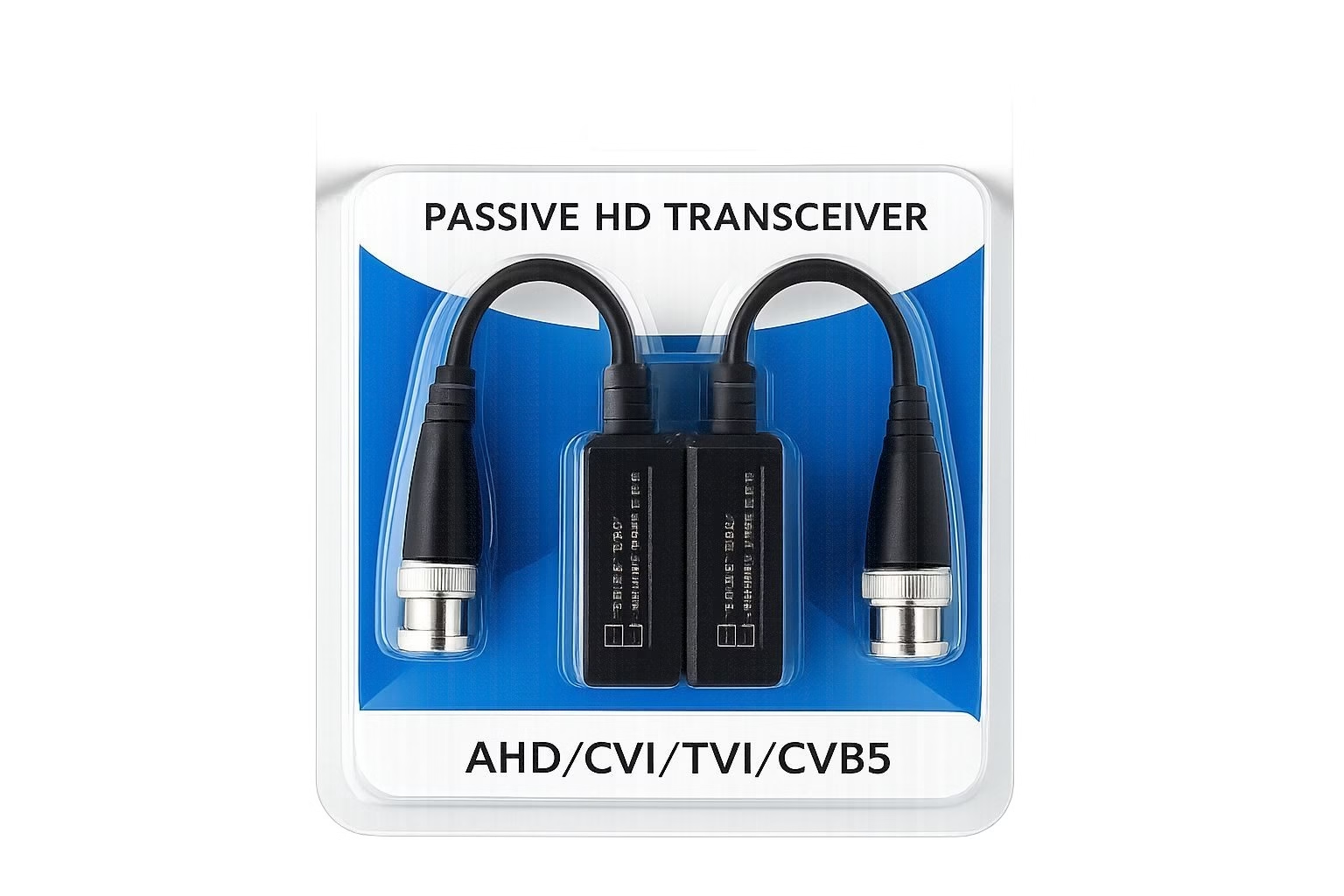
device that enables the transmission of analog video signals over unshielded twisted pair (UTP) cables, such as CAT5e or CAT6, instead of coaxial cables in CCTV and surveillance systems. The term “balun” stands for balanced to unbalanced, as it converts unbalanced coaxial signals (e.g., from BNC connectors) to balanced signals suitable for twisted-pair wiring, and vice versa. Here’s a concise description:
Key Characteristics
- Function: Converts video signals for transmission over UTP cables, allowing cost-effective use of existing network or phone wiring.
- Components: Typically used in pairs—one balun at the camera (transmitter) and one at the DVR or monitor (receiver).
- Connectors:
- BNC (male/female) for coaxial video input/output.
- RJ45, screw terminals, or punch-down blocks for UTP cable connection.
- Types:
- Passive Baluns: No external power; supports distances up to ~1,000 ft (300m) for standard analog video.
- Active Baluns: Powered; extends range up to ~3,000 ft (900m) for analog or HD (AHD, HD-TVI, HDCVI).
- Additional Features: Some models transmit power (e.g., 12V DC) and audio over the same UTP cable, reducing wiring needs.
- Compatibility: Supports NTSC, PAL, SECAM, and HD-over-coax formats; often paired with ground loop isolators to reduce signal noise.
Applications
- CCTV Systems: Connects cameras to DVRs over long distances without coaxial cables.
- Retrofitting: Uses existing CAT5/6 infrastructure for cost-efficient installations.
- Multi-Channel Setups: Supports multiple cameras via video hubs or bundled UTP pairs.
Benefits
- Reduces installation costs by eliminating coaxial cable runs.
- Simplifies wiring with lightweight, flexible UTP cables.
- Scalable for small to large surveillance systems.
Reviews
There are no reviews yet.