


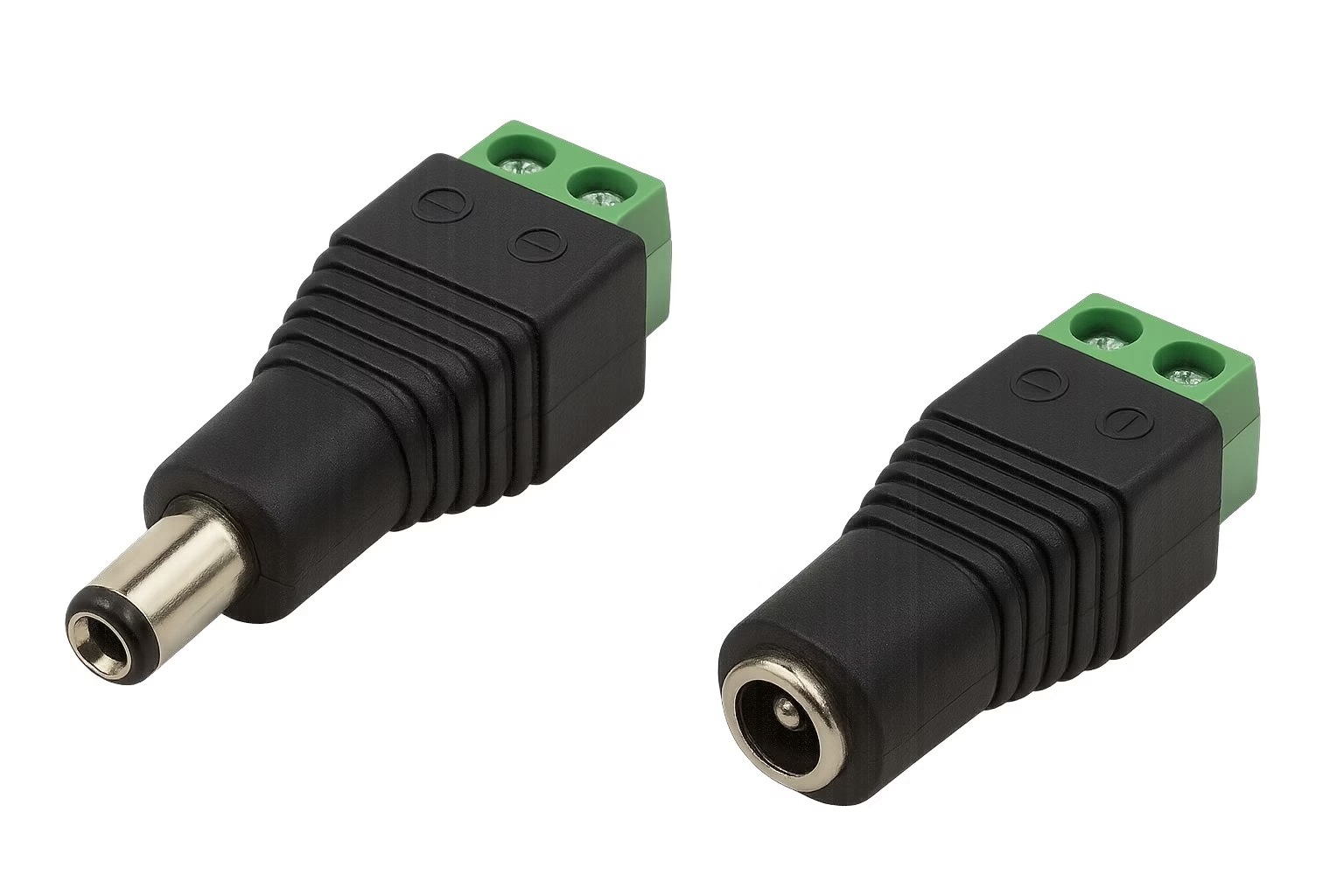
A DC jack connector is a type of electrical connector used to supply direct current (DC) power to electronic devices, commonly found in low-voltage applications like laptops, CCTV cameras, LED lighting, routers, and other consumer electronics. It typically consists of a cylindrical barrel connector (plug) and a corresponding jack (socket) that facilitates a secure power connection between a power adapter and a device.
Key Characteristics
- Design:
- Barrel Connector: Most common type, with a cylindrical outer sleeve (negative/ground) and an inner pin (positive/tip). Available as male (plug) or female (jack).
- Pin Connector: Less common, used in specific devices with a single-pin socket.
- Locking Variants: Some include a threaded or bayonet lock for secure attachment (e.g., in industrial or automotive applications).
- Sizes:
- Common barrel diameters: 2.0mm, 2.5mm, 3.5mm, 5.5mm (outer); 0.7mm to 2.5mm (inner).
- Example: 5.5×2.1mm is a standard size for many CCTV cameras and LED strips.
- Polarity:
- Typically positive tip (+ center, – sleeve) or negative tip (- center, + sleeve).
- Polarity is critical; mismatching can damage devices (check device specs or use polarity-marked connectors).
- Voltage/Current:
- Supports low-voltage DC, typically 5V, 12V, 19V, or 24V.
- Current ratings vary (e.g., 1A to 10A); ensure connector matches device power requirements.
- Mounting Types:
- Panel-Mount: Fixed to a device’s chassis (e.g., screw-in or snap-in jacks).
- In-Line: Used in cable assemblies for extension or adapter purposes.
- Surface-Mount/SMD: For PCB integration in compact electronics.
- Materials:
- Contacts: Often nickel- or gold-plated for corrosion resistance and reliable conductivity.
- Housing: Plastic or metal for durability; metal jacks offer better shielding.
Common Use Cases
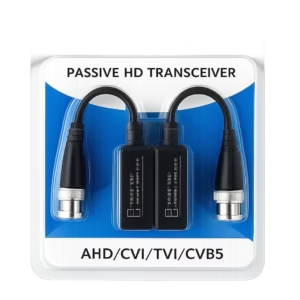
- CCTV Systems: Powers cameras, often paired with BNC connectors and video baluns for integrated video/power setups.
- Consumer Electronics: Used in laptops, routers, and portable speakers.
- LED Lighting: Connects power supplies to LED strips or modules.
- DIY Electronics: Popular in Arduino, Raspberry Pi, or prototyping projects.
- Automotive/Industrial: Provides stable power for sensors or control units.
Benefits
- Versatility: Wide range of sizes and configurations for various devices.
- Ease of Use: Simple plug-in design; some include locking mechanisms for reliability.
- Cost-Effective: Affordable, with basic connectors costing $0.50–$5.
- Compact: Ideal for space-constrained applications.
Considerations
- Compatibility: Match barrel size, polarity, voltage, and current to avoid damage or poor performance.
- Quality: Low-quality connectors may cause loose connections or voltage drops; opt for gold-plated or branded options for reliability.
- Cable Length: Long runs may require thicker cables to minimize power loss.
- Weatherproofing: For outdoor use (e.g., CCTV), choose IP-rated or weatherproof DC jacks.

Reviews
There are no reviews yet.