


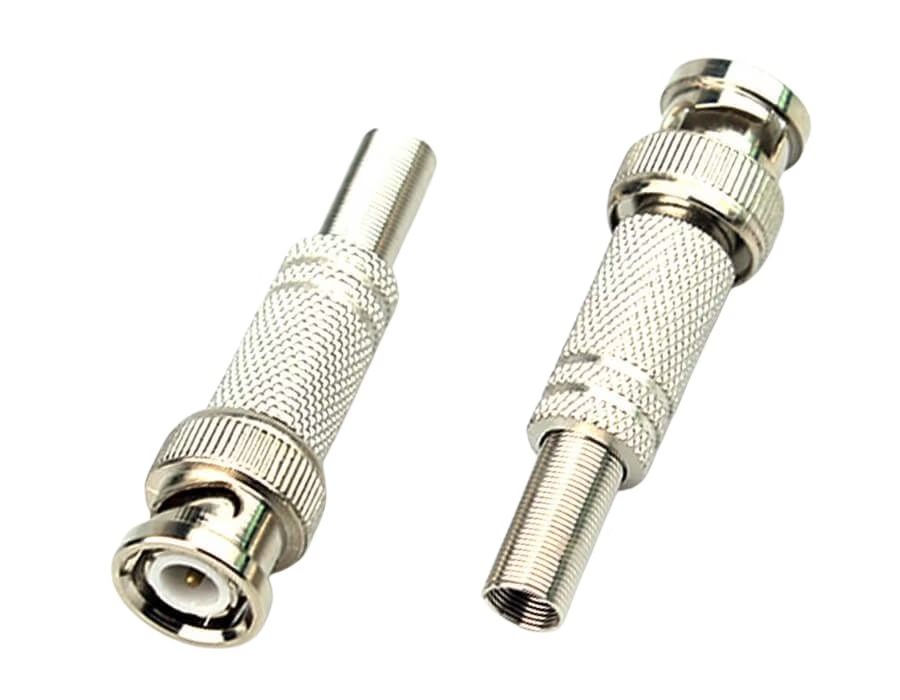
A BNC connector (Bayonet Neill-Concelman) is a coaxial RF connector widely used in video, audio, and networking applications to transmit analog or digital signals. It features a bayonet-style coupling mechanism for quick, secure connections and is commonly found in CCTV systems, broadcast equipment, and test instruments.
Key Characteristics
- Design:
- Cylindrical with a central pin (male) or socket (female) for signal transmission.
- Outer conductor provides shielding to minimize interference.
- Bayonet lock ensures a firm connection with a quarter-turn twist.
- Impedance: Typically 50 ohms (for RF/communication) or 75 ohms (for video applications like CCTV or SDI).
- Signal Support:
- Analog video (e.g., NTSC, PAL, SECAM).
- HD video (e.g., AHD, HD-TVI, HDCVI, SDI).
- RF signals up to 4 GHz (depending on cable and connector quality).
- Types:
- BNC Male: Pin center conductor, often on cables.
- BNC Female: Socket, typically on devices like cameras or DVRs.
- Variants: T-adapters, barrel connectors, or terminators (e.g., 75-ohm terminators to prevent signal reflection).
- Cable Compatibility: Works with coaxial cables like RG-59, RG-6, or RG-58, depending on impedance and application.
- Durability: Built for frequent connect/disconnect cycles; high-quality models use gold-plated contacts for corrosion resistance and signal integrity.
Common Use Cases
- CCTV Systems: Connects cameras to DVRs or monitors, often paired with video baluns for UTP transmission.
- Broadcast/Video Production: Used in professional video equipment for SDI or analog signals.
- Test Equipment: Common in oscilloscopes, signal generators, and other RF testing devices.
- Networking (Legacy): Used in early Ethernet (10Base2) setups.
Benefits
- Reliable Connection: Bayonet lock ensures secure attachment, resistant to vibration.
- Versatility: Supports a wide range of video and RF signals.
- Ease of Use: Quick-connect design simplifies installation and maintenance.
Reviews
There are no reviews yet.